
The model for team organization known as GRPI (goals, roles and responsibilities, process, and interpersonal skills) began in the field of social science and has since been adopted into Six Sigma’s change acceleration process (CAP) tool kit. Let’s start our discussion of GRPI by establishing the context around CAP.
Change Acceleration – The Roots of GRPI
CAP is a process and set of tools focused on helping Belts drive change successfully at a desired speed. The root of CAP lies in Kurt Zadek Lewin’s Force Field Change Model. Lewin, one of the modern pioneers of social, organizational and applied psychology, highlights the following:
- There are forces driving change and forces restraining it.
- When there is equilibrium between the two sets of forces there will be no change.
- In order for change to occur the driving forces must exceed the restraining forces.
As shown in the figure below, Lewin’s change model defines three stages in the process of change:
- Unfreezing: This is the shakeup phase triggered by a problem. The result is the acceptance that the existing structures and ways are not working.
- Moving: This is the process of devising and implementing the change.
- Refreezing: This is the phase of sustaining the change.
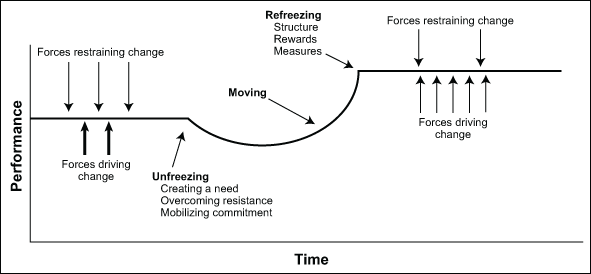
Lewin’s Change Model
Lewin’s force field analysis is used to distinguish which factors within a situation or organization drive a stakeholder toward the desired state, and which factors oppose the driving forces.
Typically, when trying to bring about change, discussion focuses on managing the stakeholders, particularly stakeholders external to the project. But it is also important to focus on the team that is driving the change. The executing team must have a strong belief in and be motivated to enable the change. That belief and motivation derive from a team’s clearly defined objectives.
What Is GRPI?
GRPI is used to ensure practitioners gauge the factors critical to team development in a structured way – and act on these factors throughout the project. Teams and organizations can be viewed through GRPI based on four fundamental dimensions:
- Goals: Are the mission and goals of the team clear and accepted by all members? Are they in tune with the team’s environment?
- Roles and responsibilities: Are the roles and responsibilities clearly described and understood? Do the defined roles fully support the team goals?
- Process and procedures: Are there processes and procedures operating in the group (such as problem-solving methods, communication procedures, decision-making processes, etc.) that are 1) understood and acceptable and 2) supportive to the group’s goals and roles?
- Interpersonal relationships: Are the relationships among team members healthy and supportive of good team work? Is there an appropriate level of trust, openness and acceptance in the group? The I of GRPI is a function of the G, R and P. In order to achieve the I, there are two important items to keep in mind: 1) effective communication and 2) conflict avoidance and resolution.
GRPI is a simple framework for any project and should be used 1) when initiating a team and planning the first steps and 2) when a team is not working well and it is not clear why not.
During a process improvement project, GRPI can be initiated in any phase but for optimal use should be deployed in the Define phase of a DMAIC (Define, Measure, Analyze, Improve, Control) project, and be modified and updated as needed as the project progresses.
A GRPI Example
A sample GRPI checklist is shown below in Table 1. For each of the checkpoints, a current state is evaluated. (The current state is highlighted with blue, while the desired state is highlighted with green.) The ideal desired state is a perfect 10, but a desired state is also determined by available time. Table 1, for example, shows the current versus desired states for a situation based on a one-month timeframe.
| Table 1: GRPI Checklist | ||||||||||||||
|
1 |
2 |
3 |
4 |
5 |
6 |
7 |
8 |
9 |
10 |
|||||
|
G |
Purpose and Outcomes | |||||||||||||
| We understand and have an agreement on our project’s mission and the desired outcome (vision). | ||||||||||||||
| Customer and Needs | ||||||||||||||
| We know our stakeholders, what the stakeholders require and the CTQs. | ||||||||||||||
| Goals and Deliverables | ||||||||||||||
| We have identified specific, measurable and prioritized project goals and deliverables linked to our project goals. | ||||||||||||||
| Project Scope Definition | ||||||||||||||
| We understand and agree upon what is in and out of our project scope and tasks. The project scope is “set.” | ||||||||||||||
|
R |
Roles and Responsibilities | |||||||||||||
| We have defined and agreed upon our roles, responsibilities and resources for the project team. | ||||||||||||||
| Authority and Autonomy | ||||||||||||||
| Our team understands the degree of authority and empowerment we have to meet our project mission. | ||||||||||||||
|
P |
Critical Success Factors | |||||||||||||
| We know and are focusing on the key factors needed to meet the project goals and mission. | ||||||||||||||
| Plans and Activities | ||||||||||||||
| We have an effective game plan to follow that includes the right tasks, clearly defined and assigned. | ||||||||||||||
| Monitoring and Measures | ||||||||||||||
| We have an effective monitoring process and specific metrics linked to progress and goals. | ||||||||||||||
| Schedule and Milestones | ||||||||||||||
| We have defined our project schedule, including the key phases and milestones. | ||||||||||||||
|
I |
Team Operating Agreement | |||||||||||||
| We have shared expectations as well as agreed upon and followed guidelines for how our team works and communicates. | ||||||||||||||
| Interpersonal/Team | ||||||||||||||
| We have the necessary relationships, trust, openness, participation and behaviors for a healthy and productive team. | ||||||||||||||
| Current state | ||||||||||||||
| Desired state | ||||||||||||||
| Table 2: GRPI Tools Reference | ||
| GRPI Category | Subcategory | Six Sigma Tool/Concept |
|
G |
Purpose and outcomes | Identification of business “Big Y” |
| Customer and needs | ? Stakeholder analysis (customer segmentation) ? Voice of each stakeholder |
|
| Goals and deliverables | Project Y metric and alignment to business “Big Y” | |
| Project scope definition | ? In-frame/out-frame ? Include/exclude |
|
|
R |
Roles and responsibilities | ARMI (approval, resource, member, interested party) or RACI (responsibility, accountability, consultation, inform) charting |
| Authority and autonomy | ARMI/RACI charting | |
|
P
|
Critical success factors | ? More of/less of ? Critical success factor charting |
|
I
|
Effective communication, conflict avoidance and resolution | Communication plan |
The model should be reviewed periodically to monitor team performance.
