
© Beyond This/Shutterstock.com
Key Points
- Quality drift is natural, but doesn’t have to be permanent.
- Kaizen offers practical tools for easy course correction.
- Continuous improvement empowers people, alongside improving processes.
Drifting quality isn’t a reason to panic.
It is only natural that things drift out of spec without care and consideration placed toward them. If you’re not engaging in good practices, it will happen.
Thankfully, you don’t have to let things drift out of spec too far, as you can apply some handy techniques from Kaizen to get things back on track, proactively.
Making use of Kaizen to course-correct ailing processes isn’t just about protecting your bottom line, but also about empowering your entire workforce.
So, let’s look at some practical strategies making use of Kaizen to get things rolling as they should.
PDCA Cycle
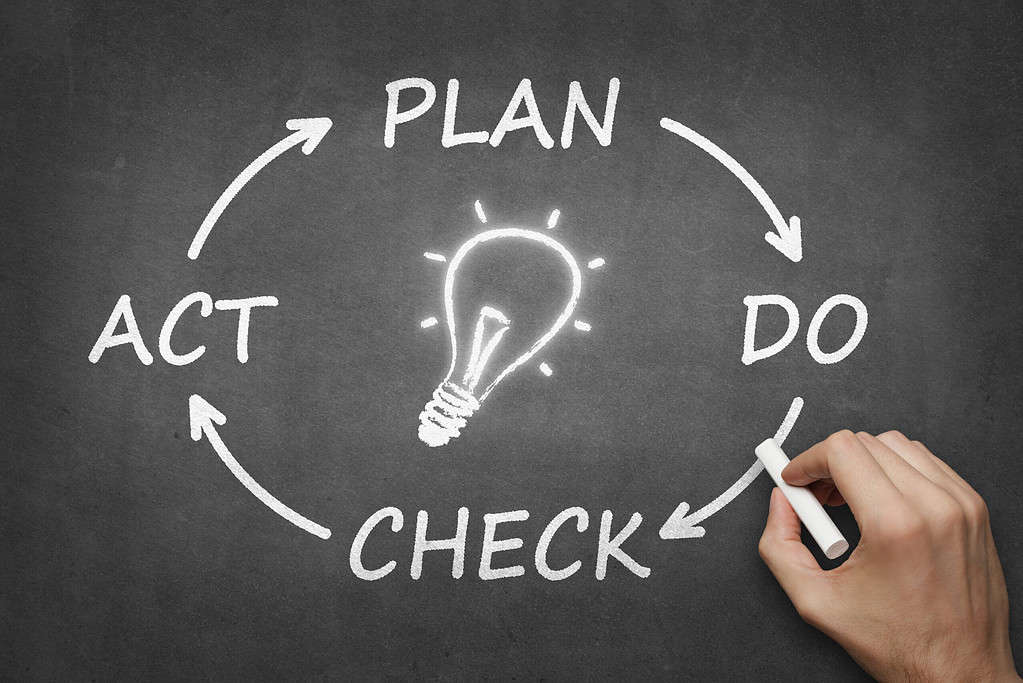
One of the core foundations of Kaizen is the PDCA Cycle. PDCA, or Plan, Do, Check, and Act, is a continuous, iterative cycle intended to make for rapid course correction. You can break down the steps as follows:
- Plan – With quality drifting, the team identifies the problem, analyzes its causes, and develops a plan that is small in scope to address it.
- Do – The team implements the proposed solution in a controlled environment.
- Check – Results are measured and evaluated against the overall goal of your team’s plan. Was the issue corrected? Did the change cause any negative consequences to come to the fore?
- Act – If the solution works, make it a best practice. If it wasn’t successful, start the process again at the Plan stage to take a different approach.
The PDCA Cycle gives an effective, simplified framework intended to coax out immediate results. By working in a controlled environment, you don’t have to worry about the effects it’ll have on your immediate production workflow. It also serves to codify good practices across the entire organization, with SOPs pointing the way when considering future improvement initiatives.
Gemba Walks
A common technique you’ll see used in Kaizen, and Lean by extension, is the regular application of Gemba Walks. Gemba is Japanese for the actual place, and as you might guess, it includes taking a walk through where the work is done. You can’t hope to improve processes without some first-hand knowledge and experience of how they function, and Gemba Walks provide that readily.
Further, it allows you to engage with your team to see frustrations, receive feedback, and gain insights into how processes are working for them. If quality is drifting, taking the time to engage in a Gemba Walk can allow you to see where things are going wrong. Direct observation is key when considering root causes and developing effective, immediate solutions.
The main objective of a Gemba Walk is to inform any process improvement initiatives with first-hand knowledge of how things are functioning. A team cannot hope to improve any aspect of its workflow relying purely on hearsay and second-hand accounts of what is going wrong in the production environment on the whole.
The 5 Whys
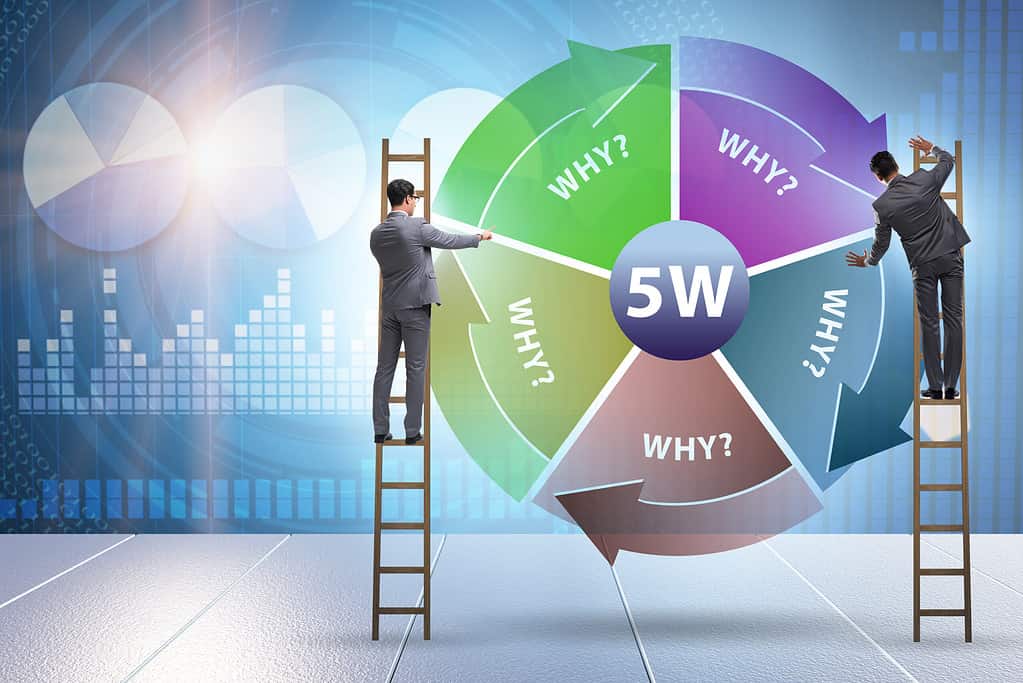
One of the most powerful frameworks you’ve got available in Kaizen is the 5 Whys. We’ve talked at length in the past about root-cause analysis frameworks and problem-solving techniques. Where the 5 Whys excels is in not needing any external tools or software to conduct the entire analysis. Instead, you’re simply asking the question of why something is going wrong, which drills down until you reach the root cause of your problem.
For immediate course correction, this is a highly powerful tool that allows for quick fixes and remediations that work. Any sort of ad-hoc, hacky approach can get things back on track momentarily, but they aren’t addressing the underlying cause of the problem. Instead, by drilling down until you reach the root of an issue, you’re enabling your team to enact lasting changes.
This is applicable to any department as well, at least when considering the broader scope of your organization. As such, you’ll want to make frequent use of the 5 Whys in conjunction with other techniques like PDCA to create lasting, workable solutions that get your quality back on track.
Jidoka
The human factor in any production workflow is invaluable. However, people are prone to errors, which is no fault of their own. Jidoka, or automation with a human touch, is intended to take some of the tedium out of the workflow. Rather than churning full steam ahead, you are enacting automation workflows that can stop themselves when something is out of spec.
When defects or abnormalities are detected, that is when the human touch comes into play. While stopping the production line momentarily can seem catastrophic when considering overall deadlines, it serves a valuable purpose. By addressing defects now, you’re preventing expensive rework, material waste, and unhappy customers later.
Containing the problem through automation is an invaluable means of keeping your production workflow on track. Being able to take the time to pause production to correct mistakes, address defects, and get quality back within guidelines is only going to benefit your bottom line in the long run.
Poka-Yoke

©Cast Of Thousands/Shutterstock.com
What if you had a means of designing processes that made it impossible to lead to mistakes or defects? This isn’t just a pipe dream under Kaizen, but rather a widely practiced technique. Poka-Yoke, or mistake-proofing, is a means of designing processes that makes it so mistakes and defects from making it into final production.
Consider something like a USB port for a moment. There is only one way to plug the cable in to get it functioning. It simply won’t plug in the wrong way, especially if it’s something like a USB-C cable. This is designed with principles like Poka-Yoke behind it.
Poka-Yoke can be a preventive measure, but it also serves as real-time course correction. If recurring quality errors are found in production, a Poka-Yoke process being developed can stop it dead in their tracks without impacting your customers’ satisfaction.
Standardization
No matter how you want to approach things, if work isn’t standardized, it suffers. Thinking about it in a hypothetical sense, letting each operator of a piece of machinery use it how they see fit isn’t going to lead to quality outputs. As such, developing standardized forms of work is one way to keep a baseline of consistency and quality.
How do you standardize work? Well, you document best practices, which include adaptations and revisions derived through techniques like Poka-Yoke, PDCA, and Jidoka. It won’t occur immediately, but you’ll be constantly honing the workflows until they’re at their best in due time. Having a readily cited baseline for quality and consistency is also going to benefit future continuous improvement initiatives.
Visual Management

Making use of solid visual management tools is one key way you can address quality issues. The use of something like a Kanban board allows you to see where bottlenecks and problems are arising, without the need for exhaustive analysis of metrics and KPIs. Kanban boards are rather simple tools, with categorized workflows that help to visualize work in progress and the hand-off process.
If you suspect there is a bottleneck or issue somewhere in production, like the need for extensive rework, for example, consulting a Kanban board for each process in your workflows is going to highlight where the issue is. From there, you can make use of some of the previously mentioned techniques to drill down to what is causing the issue on the whole.
The 5S Methodology
Our last technique isn’t intended to bolster quality, but instead provides a means of organizing, streamlining, and standardizing workflows. The 5S Methodology, or Sort, Set in Order, Shine, Standardize, and Sustain, isn’t going to overhaul problem processes that are falling shy of quality standards.
Instead, what the 5S Methodology does is enable a cleaner, more organized workspace. With that in place, you can readily detect where quality issues are arising. Further, by implementing standardization, you’re creating the means to make sure all improvements are guaranteed and safeguarded for the future.
Other Useful Tools and Concepts
Ready to start the work week right? You might want to take a closer look at how you can align cybersecurity initiatives with long-term corporate strategy. Security is often treated as a siloed means of providing safeguards for vital assets, and that doesn’t need to be the case.
Additionally, you might want to take a closer look at how you can use Agile to regain customer trust. If you’ve had projects that landed with a thud, taking corrective, iterative steps is one way to regain the trust of your customer base. Agile is a people-first methodology, making it an ideal fit for increasing overall customer satisfaction.
Conclusion
Drifting quality doesn’t have to be left to its own devices. Instead, taking proactive, iterative steps through Kaizen is a fantastic means of building a better, streamlined workflow that adapts to whatever issues might arise.
