
© Juice Flair/Shutterstock.com
Key Points
- Kaizen and inventory management go hand-in-hand, and for all the right reasons.
- One of the biggest benefits of Kaizen and inventory management is boosting employee empowerment.
- There is a direct line between better inventory controls and increased profits.
One of the most important lessons anyone can pick up in the business world is that having an efficient warehouse and inventory management system is a strong sign of success. On the flip side, if your inventory system is running inefficiently, it likely means you are leaving money on the table and have angry customers clogging your customer service lines.
While there are a number of methods and systems to improve inventory management for your business, Kaizen is not to be overlooked. Essentially translating to “continuous improvement,” Kaizen is a system that looks to standardize processes, which can go a long way to improving inventory management and boosting supply chain resiliency.
What Is Kaizen?

©Pedal to the Stock/Shutterstock.com
To better understand how Kaizen can impact and improve inventory management, it’s important to understand exactly what Kaizen is in the first place. At its core, this system, first introduced by Toyota at a factory in Japan, is basically a system of working through incremental but continuous improvement.
On the plus side, just about any kind of organizational process can see the benefits of adopting a Kaizen approach, which is all about standardizing processes. Also known as a collaborative process, Kaizen is all about advocating for progressive change while limiting risks. Kaizen is also categorized within the school of thought focused on continuous improvement.
Kaizen heavily focuses on five different elements, including teamwork, personal discipline, improved morale, quality circles, and suggestions for improvement. All of these things come together to show the benefits of Kaizen and why it has been successful for Toyota and other companies.
At its core, Kaizen is all about setting up new habits, inventory habits in this case, with minimal effort, all while simplifying workflows. The goal is to eliminate risk factors, all while motivating employees to perform at their peak.
What Is Inventory Management?
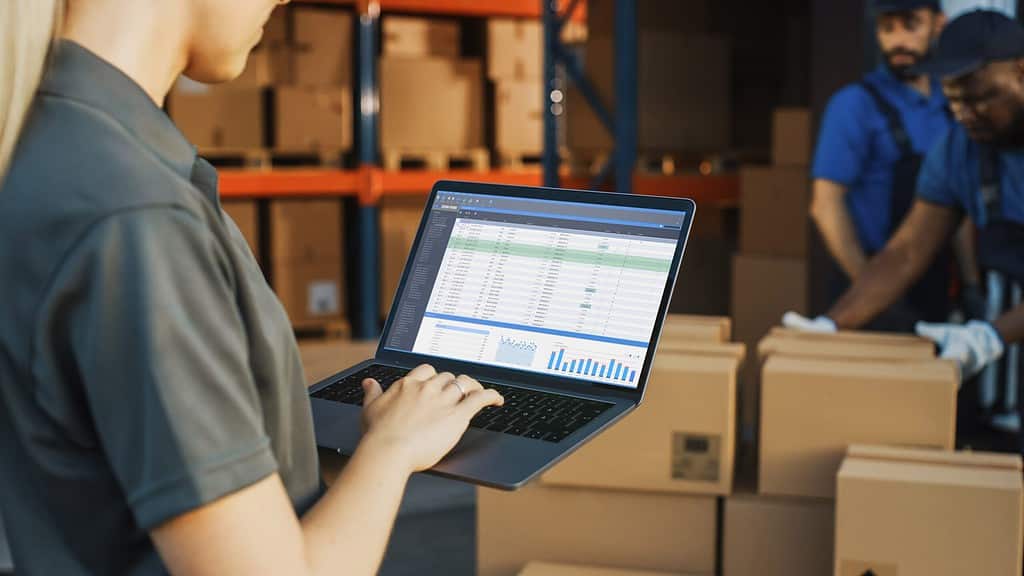
At its core, inventory management isn’t all that difficult a concept to grasp, as it’s basically having just the right amount of inventory available at a time. In other words, this is basically a reminder not to have too much inventory lying around, taking up space, or not having too little inventory available that you are unable to fulfill customer orders.
Unsurprisingly, having too much or too little can lead to significant financial concerns, especially with excess inventory. In the case of excess inventory, operating costs could rise, which impacts margins, so maintaining the correct balance of inventory no matter the business type isn’t just a nice-to-have; it’s a critical part of your business model.
As far as an actual definition of inventory management, it’s basically highlighting what was already said, in that it’s all about tracking the availability of products and materials, all while keeping them at a pre-determined appropriate level to meet demand. This involves continuously tracking inventory levels, looking at historical data, and requires very close coordination with both supplies and customers alike.
Ultimately, inventory management is all about making sure that a business has all of the goods it needs, when it needs them.
Where Does Kaizen Come In?
When you try to draw a straight line between Kaizen and inventory management, it’s all about a few different factors that become the primary focus. At the very top of the list is improving inventory accuracy, followed by reducing stock discrepancies. You’ll also want to utilize Kaizen to prevent overstock and stockouts, which can have a real negative effect on a customer’s ability to place and receive an order.
In addition, you want to streamline stock movement and storage, so you don’t have warehouses filling up with unused or unnecessary inventory. Last, but certainly not least, is to create a standardized set of procedures that can be incorporated into a business’s DNA that truly benefits how they handle inventory.
1. The 5S System
A primary cornerstone of Kaizen is the 5S system, which is essentially exactly what it sounds like. There are five different methodologies as part of Kaizen that help with inventory management.
At the top of the list, you have Sort (Seiri), which is focused on removing unnecessary inventory items and clutter all across a warehouse. The second S is to Set in Order (Seiton), which is to arrange all of the available inventory in a logical way so that it’s easy to access and labeled to help someone working in a warehouse find something as fast as possible.
The third S is known as Shine (Seiso), which is all about asking employees to assist with warehouse duties by cleaning and inspecting shelves and stock regularly. The last thing any company wants is not to have working equipment whenever it comes time to restock, which only creates more chaos around a warehouse.
S number four is known as Standardize (Seiketsu), which is to create consistent inventory management processes, which is one of the core steps of Kaizen. It’s in this step that a company, no matter if it’s some kind of manufacturer or a retail giant, should have a consistent warehouse process to keep things moving.
Finally, S number 5 is Sustain (Shitsuke), which is to promote all of the self-discipline necessary to promote the 5S culture to employees. The goal is to have this system be so intertwined in the work that they do that it becomes second nature to adhere to these steps in the future.
2. Just-in-Time Inventory

©Ground Picture/Shutterstock.com
Another potential inventory management system that adheres to Kaizen principles is also known as “Just-in-Time” or JIT inventory. The idea here is as simple as it can get in the Kaizen world, in that a company only produces just enough inventory that is needed at any given time. The emphasis is on reducing excess stock, which limits how much of a warehouse is taken up, which in turn reduces cost overruns, which has the side benefit of improving overall cash flow.
3. Kanban System
If you work in a Kaizen system that believes in the Kanban system, this is all about visual elements such as cards, bins, or digital alerts that let someone in a warehouse know that it’s time to restock shelves. This system has long been shown to be effective at maintaining just the right balance in a warehouse to avoid both understocking and overstocking.
4. Standard Operating Procedures
Any company that wants to perform at a performance peak in the Kaizen world better have SOPs or standard operating procedures drafted up and distributed to key employees. These SOPs are most likely step-by-step procedures to walk every employee through any possible inventory task that could affect overall inventory management. With these SOPs, the goal is to reduce the likelihood of human error, improve employee consistency, and make it easy to onboard new employees.
5. Root Cause Analysis
The Root Cause Analysis is a great way to ask “why” every time an organization sees inventory management processes break down. As soon as a process failure is detected, it’s critical that someone asks “Why?” and does so repeatedly until the root cause is identified and fixed. This leads to long-term solutions being put into place rather than just band-aids to get through the day, week, or month.
6. Continuous Improvement Meetings

Otherwise known as a Kaizen Event, continuous improvement meetings are when an organization has regular meetings, albeit short meetings, like a morning standup, to talk with warehouse staff and listen and learn about any issues. Not only does this promote team engagement, but employees also begin to feel empowered to raise issues, as they start to feel like they are the owners of their own little corner of the world.
Why These Kaizen Methods Are Important for Inventory Management
When you think about how all six of these methods are important, it’s best to understand the why. First and foremost, any reduced waste is going to help remove expired or damaged stock that either can’t be sold or, if sold, likely turns into a negative customer experience.
Separately, when you have an accurate look at inventory management with real-time data and stock levels available, you can provide a better customer experience as well as better forecast what you might need around a holiday if you are a retailer.
Faster stock movement is going to help inventory giants like Amazon fill orders better by optimizing bin locations of items that see higher order volume. It’s far more efficient for both the employees and the company.
If you look at lower carrying costs, the less inventory a company has available at any given time, there are reduced insurance concerns as well as smaller security costs.
Of course, the most important thing here might be increased customer satisfaction, which is a direct reflection of faster order fulfillment and fewer concerns over out-of-stock messages.
The final importance is to think about how staff will feel empowered when they are more involved in the Kaizen process. The more responsibility they have, the more involved and concerned they will be with making sure jobs are done right, and it has the side benefit of improving overall morale.
Leveraging Technology for Inventory Management

©Ground Picture/Shutterstock.com
One final consideration around how Kaizen can play a significant role in inventory management is the introduction or utilization of technology. Things like Inventory Management Systems speak directly to the heart of reducing waste and increasing stock tracking using technology like RFID systems. Even barcode scanners can play a big role in maintaining accurate inventory levels, which is essential to forecasting and fulfilling customer orders.
Introducing automated systems is also critical to help reduce overall waste, like overstock and spoilage. As soon as these systems are introduced, they can almost immediately deliver improved inventory accuracy, as well as highlight increased efficiency, all while delivering cost savings to the company, no matter the type of inventory that is on hand.
Other Useful Tools and Concepts
If you want to read even more about Kaizen, we don’t blame you, and you can jump right into another article all about Kaizen culture. This is a great read about how culture can help an organization improve daily, which is great for employees and the bottom line. Separately, another great reading piece around Kaizen is this take on how it can help with faster turnarounds on the tarmac for frequent travelers.
Of course, there is far more than just Kaizen to read about, as you want to jump into how to take your strategy from the presentation to the real world with Hoshin Kanri. PowerPoints are a great way to represent what you want to achieve, but it’s an entirely different thing to put it into practice and deliver the promised results.
Conclusion
Even if it’s your first time reading about Kaizen, it should be an immediate takeaway that its role in inventory management is a critical one. The same can be said for the importance of inventory management overall. Optimizing warehouse operations can have a significant impact on the bottom line of any company, and if Kaizen can introduce lasting improvements to increase margins and reduce waste, every organization should have an open mind for the future.
