
© Photo by Clayton Cardinalli on Unsplash
Key Points
- Lean manufacturing is one of the most popular business processes in the world, thanks to Toyota.
- Agile was more focused on software development initially, but it has since been converted to work in other spaces like manufacturing.
- These two philosophies might sound competitive on the surface, but they are more complementary than most people think.
It should go without saying that there are fans of both Lean and Agile in manufacturing, and for all the right reasons. Both of these business processes are well-loved in various circles for reasons that have been shown to work across hundreds, if not thousands, of businesses over the past few decades. The real challenge is deciding which one works better than the other.
The thing is, if you ask fans of each method, they are both going to say that their favorite is the one that works best, potentially without even knowing much about the other. The good news is that each one might be more suitable for different manufacturing principles, and that is okay, but this doesn’t make one better than the other, or does it?
The Origin of Both Lean and Agile Manufacturing

©Pedal to the Stock/Shutterstock.com
A popular name in the business process world, Lean Manufacturing is well-known to have originated around the Toyota Production System, which started in 1948 and was constantly being updated and developed through 1975. As part of this development, Toyota focused heavily on reducing waste, using resources efficiently, and respecting the labor force. There is no question that Lean’s success with Toyota has helped it spread to other businesses, large and small.
On the other hand, Agile manufacturing is less about the manufacturing space and has its origins more in software development. This process dates back to 2001, when a group of software engineers met in Utah to explore a more efficient way to develop software. The “Agile Manifesto” helped outline a new set of values and principles that were designed “to uncover better ways of developing software.”
What Is Lean Manufacturing?
At the end of the day, Lean Manufacturing is a little more complex than just a Toyota system, which carefully looks at how to remove waste from a manufacturing system systematically. While Toyota might have pioneered this, lean manufacturing is heavily focused on creating more value for customers.
The process of delivering a better customer experience is hopefully met successfully by customers who receive products with fewer defects, while the company reduces its inventory overhead and labor costs by optimizing workflow.
What Is Agile Manufacturing?
While Agile might have its origins in software development, it has transitioned into a far more comprehensive system, including Agile Manufacturing. Overall, Agile manufacturing is a production methodology that emphasizes the importance of being responsive, flexible, and adaptive to a business’s customers’ needs.
If you dive deep into Agile manufacturing, you see how this process is looking at what customer demands are and how market conditions are affecting those demands. As a result, a business can look at how it needs to improve its manufacturing process, whether it’s by improving team collaboration on a factory floor or by empowering workers to make quick decisions.
Lean and Agile In Manufacturing Can Offer Complementary Strengths

©Jesus Sanz/Shutterstock.com
Before trying to divide these two up and look at them as two opposing methods, it’s essential to know that there are some complementary strengths that both have and cannot be ignored. At the very end of the list is a synergy with manufacturing, as both systems are designed and used to be able to adapt to modern manufacturing challenges. Whether this is a challenge like cost pressure or shifts in customer demand, both systems are focused heavily on delivering both quality and speed.
For Lean, there is something of a unique strength in its ability to excel in a high-volume setting, while Agile thrives more in a low-volume market. However, when you combine the two, there can be a significant achievement in performance gains as multiple industry studies have shown. Similarly, both systems are heavily focused on including employees in all decision-making processes, which specifically hits on Lean building discipline. Agile, on the other hand, focuses more on the creative aspects.
Ultimately, both systems can work together in a way that boosts morale and collaboration, which is beneficial for manufacturing of all shapes and sizes.
Similarities Exist As Well
It’s hard to ignore that for both Lean and Agile manufacturing, there are similarities that cannot and should not be ignored.
At the top of this list, you have the desire to reduce expenses overall, especially during periods of downturns in the business. Changes in manufacturing or supply chain operations often happen when business is slow, so companies look to slim down their manufacturing procedures or make a turn toward Agile manufacturing, which is better suited to scaling up operations when business starts to take a turn for the positive.
In addition, you have two systems here that rely heavily on statistics, forecasting, and proactive planning. The more information that is made available to make changes to a system, the better the results that will be achieved.
The Goals of Agile and Lean Methodologies
Lean Manufacturing

©Gorodenkoff/Shutterstock.com
While both Lean and Agile have the goal of creating more value, they go about this approach differently. Lean Manufacturing is all about creating more value for a customer by reducing waste. This is done by looking across the Lean framework at things like transport, motion, inventory, waiting, overproduction, over-processing, defects, and unutilized talent.
Those who are practitioners of Lean are going to look at how to do everything they can around manufacturing in the simplest way possible, by using the least amount of resources possible. This could wind up with a company looking at how to group all of its production machines together for a production step.
This would help workers not have to make unnecessary movements on the shop floor, such as moving to different locations or stations as part of the manufacturing process, which wastes time and energy.
Agile Manufacturing
Turn things around, and you have Agile manufacturing that focuses more on delivering customer value by responding quickly to changes. On the plus side, our world is constantly changing and evolving, which means that new technologies are coming out as fast as ever, and customers demand change to keep up with these new technologies.
The same goes for a demand for skilled labor, which is outpacing supply, all while organizations are facing new competitors hitting the market. It’s for this reason that Agile is more flexible and looks at how to best incorporate new technology as it rolls out to break down challenges facing an organization.
Instead of trying to deal with a labor shortage, an Agile manufacturing might look to augment its training system to try to educate workers on how to multitask, including using digital training programs to help upskill the workforce.
Agile Versus Lean Manufacturing: The Differences
Customer Focus
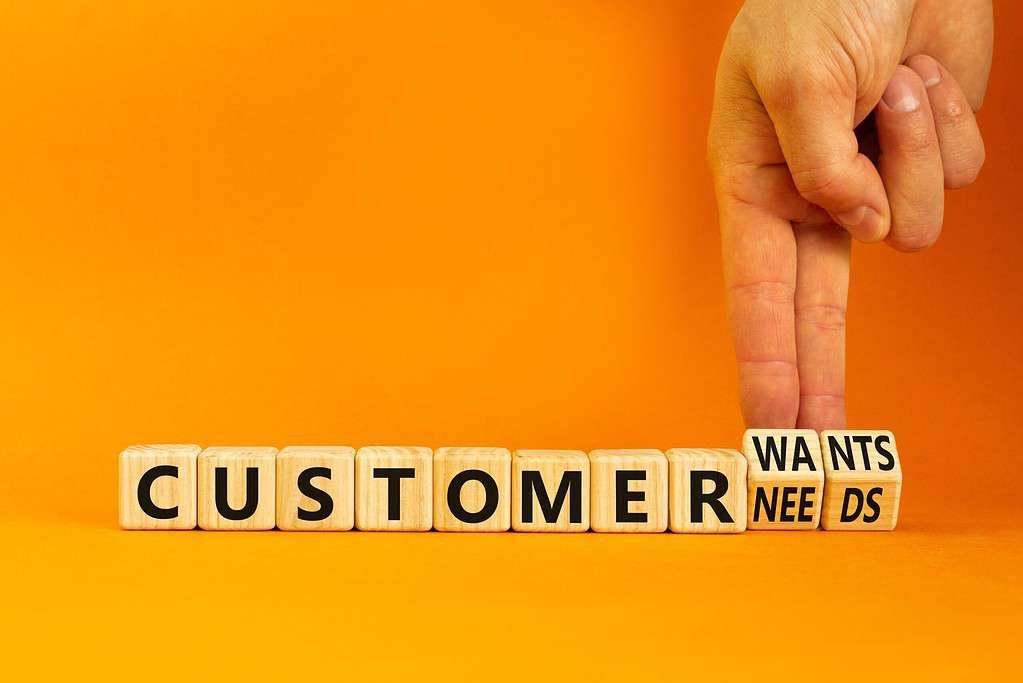
In the Agile world, there is a very strong emphasis on meeting customer needs and their preferences. The whole purpose of Agile manufacturing is to prioritize customer feedback and deliver a product that not only meets, but looks to exceed customer expectations. If a software development team following Agile principles releases software updates frequently based on customer feedback, it’s very similar in the manufacturing world.
With Lean, you must navigate customer demands while focusing on delivering more value, all while maintaining great efficiency. This is why there is such an emphasis on eliminating waste and optimizing processes to deliver a high-quality product to a customer while sustaining competitive prices in increasingly crowded marketplaces.
Approach to Change
For Agile, you might want to look at how Agile manufacturing embraces the role of change and often succeeds because of it. The reason someone might choose Agile manufacturing is that it’s highly responsive to changing customer requirements and market conditions, as well as to competitiveness and technological advancements. A great example is a retailer seeing a sudden demand for winter coats from sandals if there is a surge in demand for the former.
Separately, you have Lean, which is heavily focused on being stable and emphasizing the concept of Continuous Improvement. In the world of Lean manufacturing, you are looking for ways to reduce the number of disruptions that are taking place across the entire production and manufacturing line. It’s for this reason that companies like Toyota in the auto manufacturing world have set up processes to quickly switch between producing different types of car models.
Speed and Efficiency

There is no question that it’s Agile manufacturing that places the biggest emphasis on speed and being responsive to change. Agile manufacturing is based on the idea that it can deliver a product to market fast, all while being responsive to customer feedback and making changes based on that feedback as fast as possible.
On the other hand, Lean is more about reducing waste and being more efficient, which in turn can improve processes, all while delivering maximum productivity and quality to customers. There is no question that a Lean manufacturer is going to emphasize reducing production cycle times, which saves money, especially during business downturns, and the same goes for eliminating defects.
Choosing Between Lean and Agile Manufacturing
Lean Manufacturing
At the end of the day, you are going to choose Lean manufacturing if you are focused on process manufacturing, such as the traditional assembly line, where continuous production takes place. It’s for this reason that auto manufacturers have been so successful with Lean. Lean is going to excel in making sure that repetitive processes are helping to optimize workflow, all while eliminating waste. For companies in the automobile and electronics sectors, this is the safer option because it allows for better control over the end quality of a product.
Agile Manufacturing

©Net Vector/Shutterstock.com
If you are someone who favors Agile manufacturing, you are likely someone who is focused more on batch manufacturing and works in an industry where customer demands change pretty rapidly or have shorter lifecycles, like retail. The principles of Agile are better suited to shine in environments that are more flexible and responsive to customer feedback. This is why areas like fashion, consumer electronics, and software development excel at leveraging agile principles to better meet customer preferences.
Other Useful Tools and Concepts
If you are done reading about Agile and Lean, and I don’t blame you, it’s time to turn your attention to something a little different. Why are the Theory of Constraints and Lean complementary methodologies? Perhaps you want to jump into another methodology by taking a turn reading all about how Hoshin kanri can help with long-term strategies for your organization.
Alternatively, maybe you want to jump away from these topics altogether and look at how Kaizen can help you on the tarmac. We all want to travel from the airport a little bit faster, so this is a great read, which is all about how this business methodology is helping airports turn around passengers and airplanes faster than ever.
Conclusion
If you have to recap everything, the big takeaway here is that Lean is all about driving efficiency, while Agile is focused on driving flexibility. The good news is that both of these manufacturing principles are looking to deliver excellence in the manufacturing space, and both have done so already. The real question isn’t whether one is better than the other; the question is more about which one is better for your business.
