Key Points
- Creating differentiation in retail is one of the most important aspects of Value Stream Mapping.
- The hope is that with Value Stream Mapping, you can quickly determine where inefficiencies exist.
- Retailers need Value Stream Mapping for their employees as much as for their customers.
In today’s super competitive retail landscape, standing out from the competition isn’t just a nice-to-have; it’s downright essential. This is especially true when it comes to delivering a strong customer experience, as earning customer loyalty is one of the most outstanding ways to create more business in the future. One way retailers are striving to deliver a better customer experience is through Value Stream Mapping.
By examining a visual representation of the customer experience on paper, a retailer can easily visualize the flow of the entire business from start to finish. It’s through this process that retailers will examine where inefficiencies or bottlenecks are occurring that adversely affect the customer experience and likely lead to lost business.
What is Value Stream Mapping?
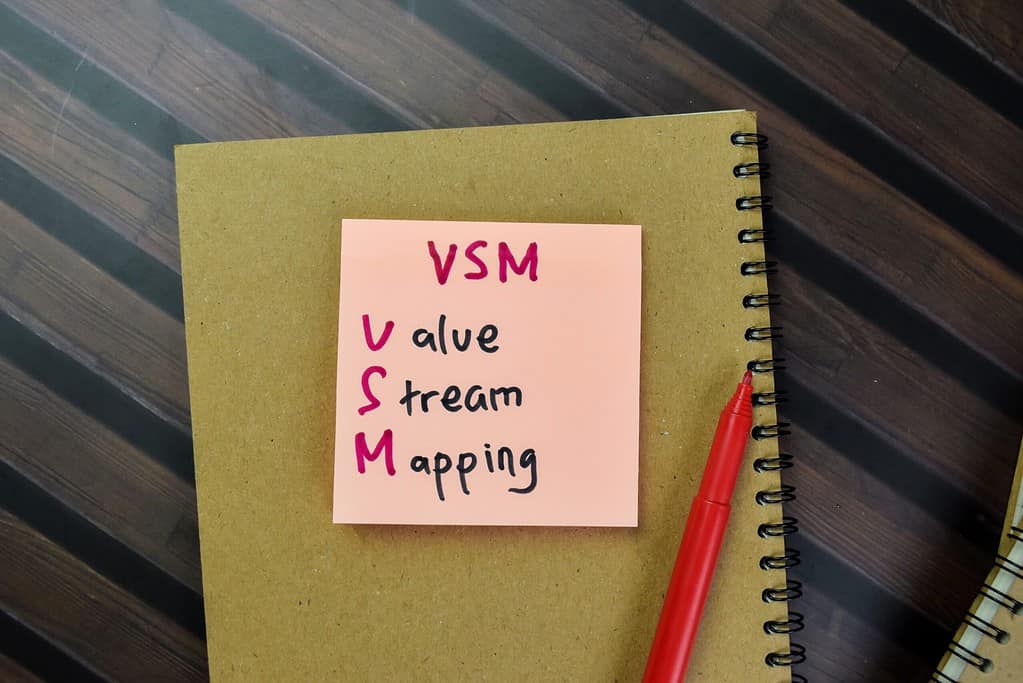
Simply stated, Value Stream Mapping is a system that visualizes every action or process required to produce a product or deliver an experience to a customer. Anyone familiar with the term knows that there is a close relationship between VSM and Lean management, but there is nothing about VSM that requires only incorporating Lean methodologies.
Instead, the goal with VSM, especially in the retail world, is to identify and eliminate any waste and streamline processes that do not add value to customers. Better yet, going through the Value Stream Mapping process will enable retailers to identify methods that deliver a better customer experience and allow them to improve upon them.
Why Retailers Need Value Stream Mapping
Picture a customer standing at a checkout line that is growing longer by the minute, and the wait time to check out is approaching double digits. Now imagine the customer leaving the store because they don’t want to wait an extra 10, 15, or 20 minutes to check out.
This not only costs the company revenue, but there is a good chance that this individual will now discuss this with their friends or on social media, which will impact customer loyalty. It’s for this reason that Value Stream Mapping and identifying areas for improvement in the business can be so valuable.
Optimizing any retail experience is likely to boost overall customer satisfaction, increase customer retention, and lead to word-of-mouth referrals through social media. In a competitive retail market that is growing more competitive by the day, anything that can be done to stand out needs to be done.
Understanding Value Stream Mapping In Retail
VSM as a Superpower
For a moment, try to imagine a retail team situated around a giant flowchart, or a Value Stream Map in this case, and looking at every step a customer takes along their retail journey. Whether it’s through an online store, at a point of sale, or in receiving a delivery, Value Stream Mapping will identify bottlenecks that cause frustration, such as slow restocking, and ensure that retail inefficiencies are no longer easily ignored by a company.
Focusing on the Shopper
Whether it’s a hassle-free return or a quick response to online questions through a chatbot, there’s something about focusing on the shopper that benefits every retailer in the world. The primary purpose of using Value Stream Mapping is to shift management’s focus to the customer experience. By doing so, work will be done to ensure that every customer touchpoint feels both personalized and seamless.
Identifying Key Metrics

By utilizing Value Stream Mapping, a retailer can examine a map of processes, such as order processing, wait times, or stock updates, and tailor them to the specific needs of the retail industry. The ability to track metrics, such as how long a customer waits to check out or how long a customer service call takes to resolve, will give leaders insight into where the company is falling short.
Companies like Amazon and Walmart have made a point of examining how to streamline the customer’s journey to drive additional loyalty.
Mapping The Retail Customer Journey
Charting Current Flow
One of the best aspects of VSM is to chart the current flow a customer takes and who they talk to along the way. Everyone, from store staff to logistics and online support, is critical to the customer journey. A business needs to utilize VSM to identify pain points, or a “current state” map of areas where the customer experience is suboptimal.
Involve the ecosystem
Another aspect of the VSM process should be to speak with employees who are on the front lines in retail to gather their perspective on what’s happening. Like the customer, these frontline employees will be able to help identify their frustrations, such as dealing with constant out-of-stock items, confusing signage, or slow systems that create a backlog during checkout. Nordstrom famously engages with its employees and collaborates with them to identify opportunities to enhance the customer experience.
Identifying Waste

©Chay_Tee/Shutterstock.com
Another significant reason to utilize Value Stream Mapping is to identify where waste exists in the shopping experience. Do customers need to fill out a form before checkout? If you are familiar with Lean, you know that waste is anything that doesn’t enhance the shopping experience, and Value Stream Mapping is going to lay these bare. If slow customer service responses are creating a headache or returning an item has too many steps, it will create friction between the business and the customer.
Reimagining Retail
A New Retail Journey
If used properly, Value Stream Mapping will help a retailer reimagine the retail journey a customer experiences. In other words, retailers should create a vision of what their ideal future state looks like. This is an experience where customers can quickly check out online, see if items are in stock within seconds, and receive packages on time, or even ahead of schedule. This vision is designed with no waste in the form of no unnecessary clicks online and no unnecessary forms while checking out in person.
Launching New Retail Experience
As part of this reimagined retail experience, the goal is to launch the new experience as quickly as possible. Leaders must shape what the future looks like and then rally the team to perform at a level that helps deliver on this promise soon. This means everyone, from website designers to cashiers and warehouse workers, is on board with this new future.
Tracking Success

One of the reasons why Value Stream Mapping is so successful is that it’s never over. The goal now, with a supercharged retail experience rolling out, is to examine key metrics and identify what is successful. The reality is that you will not only find more success, but you will also likely discover where your new VSM has created additional inefficiencies.
This means you get to do Value Stream Mapping repeatedly, as retailers should continually improve to deliver a better customer experience. The idea that building a continuous improvement culture will ensure that the company not only stays competitive, but also delivers on its promises to keep both staff and customers excited about shopping.
Other Useful Tools and Concepts
If you want to learn even more about Value Stream Mapping, start by reading our step-by-step guide on VSM for beginners. This is a great way to learn all about the ways VSM can be helpful in both the retail industry and beyond.
Additionally, you can start your morning off right by reading all about some of the potential aspects of VSM, like Gemba Walks. A Gemba Walk is an excellent way for a company’s leaders to truly understand what frontline employees are thinking and see for themselves exactly how they can make a difference.
Conclusion
When it comes to secret weapons in retail, Value Stream Mapping is wildly underrated. Not only can it have an impact on every customer touchpoint, but it can also make life easier for employees across the entire value chain. Eliminating waste and amplifying value are areas that retail leaders should be eager to improve, and implementing Value Stream Mapping is an effective way to do so.
