
© Net Vector/Shutterstock.com
Key Points
- BPR promotes end-to-end ownership and employee empowerment.
- Automation isn’t just for efficiency, but enables organizations to more readily realize their strategic goals.
- BPR isn’t intended solely for improving processes, but instead, going toward a clean slate.
What does the future of business processes look like?
We’ve seen quite a bit of change just over the last 40 years in how business processes are constructed. As technology grows more advanced, we’re due for a new paradigm shift. Radical approaches like BPR are becoming rather common when it comes to designing processes from scratch.
This might come as a bit of a surprise, given that BPR is such a radical means of handling things. Significant risk, the potential for failure, and a lack of engagement are just a few reasons why BPR can be such a fundamentally terrifying thing to implement when thinking about implementing it.
The businesses of tomorrow are focused on speed, efficiency, and aligning processes with long-term strategic goals. As such, these aren’t processes born out of a desire for incremental improvements over years, but sudden, drastic change now.
So, let’s take a closer look at just how BPR and automation are changing the way companies are doing business.
Clean Slate Approach

©Ground Picture/Shutterstock.com
Traditional approaches to business process improvement focus on gradual, incremental changes. This can be fine, especially if you’ve got efficient processes running in the first place. However, dysfunctional processes can be a common occurrence, which leads to the need for radical rethinking. You aren’t just taking a look at how to revamp a faulty process. Instead, you’re looking to question every assumption about you’re doing business.
Workflows are changing. That’s just a natural part of the shift in the business world. Approaches like BPR are a fast way of implementing changes effectively, sort of like how Kaizen is a rapid way of introducing improvements in Lean. You’re moving well past the norm you’ve established in your business with BPR, which can lead to some significant changes in any organization. Let’s take a look at a few of the core benefits of utilizing this approach.
Eliminating Redundancy
One of the biggest wastes you’ll encounter with any business processes is going to be redundancy. Given enough time, a large enough organization is going to have significant overlap between processes. You’ll have hand-offs, manual approvals, and assorted other unnecessary steps that significantly inflate costs and the time needed to get your product out the door.
That’s where something like BPR comes in handy. You’re taking a look at the nuts and bolts of your customer requirements, and looking to minimize the distance between the start of a project and completion. The goal for any successful reengineering effort is to create faster, more direct means of getting your product or service to the customer.
End-to-End Ownership
Historically, businesses sort of behave cross-functionally. Not in the most efficient manner, mind you, but working between departments is a fairly typical way of doing things. Now, this can be grand for certain workflows, like moving from development to quality assurance for a smartphone app. However, this can lead to responsibility and ownership of any business processes being split between multiple teams across disparate departments.
One of the core tenets behind BPR is to promote end-to-end ownership. Processes are handled and administered by a single team, typically. This cuts down on hand-offs and speeds up the workflow tremendously.
Empowering Employees
One of the best things about BPR is that when properly implemented, you’re fully engaging your employees. Doing away with the likes of hierarchical approvals and automating routine work means that frontline employees are trusted to make decisions at the point of action. This has the benefit of substantially increasing production speed while also empowering employees in the process. An empowered employee is going to be far more engaged with a redesigned workflow, and you’ll notice a significant increase in productivity as a result.
Automation as an Enabler
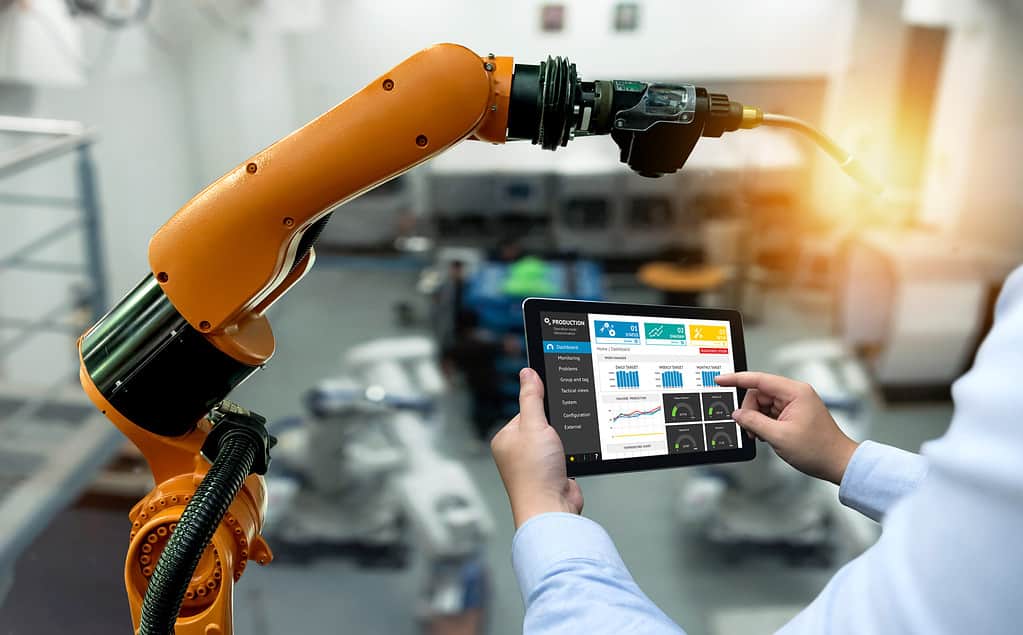
Technology is a driving force behind any newly designed business processes under BPR. You’re looking for ways to increase speed, efficiency, and productivity, and modern technology excels in most of these areas. However, rather than focusing on the likes of new tech infrastructure, we’re focusing primarily on automation.
Automation sets the foundation of newly designed business processes to align with your strategic vision. Further, you’re cutting down on the busywork and taking a more holistic approach to your technology stack across the board.
Repetitive Tasks
Employees wasting time on repetitive tasks isn’t a consideration with automation. No one likes doing the tedious parts of work, so you might as well let Robotic Process Automation take control. These tools are used to handle repetitive, rule-based tasks. This frees up your employees from the mind-numbing busy work and lets them focus more on value-added activities that benefit from a human touch.
Integrating Systems
Automation tools have the handy benefit of readily integrating disparate systems. From a productivity perspective, this is one of the best advantages of leveraging the technology. A unified, streamlined workflow of your systems ensures that there is no need for manual data entry and makes sure information is captured at the source.
Real-Time Insights
Automation, powered by modern technology like artificial intelligence and machine learning, enables real-time monitoring. This enables new workflows for analytics, allowing companies to see how things are performing without needing to gather data after the fact. Companies can track KPIs and identify new areas to optimize.
Impact on Business and Employees

When it comes to future business processes, they have a significant impact on how businesses operate and how employees are allowed to function. While the initial stages of implementation can be somewhat uncertain, success depends on sticking the landing.
Increased Efficiency
As previously mentioned, the elimination of waste and automating tasks allows organizations to see significant reductions in operational costs and cycle times. This leads to a healthier bottom line and increased productivity, with greater overall efficiency being the result of the implementation.
Enhanced Customer Experience
If you couldn’t guess, the increase in speed and productivity can greatly enhance customer satisfaction. Workflows are faster, more transparent, and allow for faster delivery of services and goods. This leaves room for personalized interactions and a greater overall customer experience.
Greater Agility
With streamlined workflows and automation taking the reins, organizations have the room to ably navigate challenges as they arise. Greater overall agility is a net benefit for organizations and enables organizations to quickly adapt to market changes as they occur. Employees don’t have to contend with routine tasks, dedicating more time to problem-solving and getting outside the box when it comes to innovation.
The Human Element
There are numerous beneficial reasons to use BPR and automation, but they will inevitably have an effect on your employees. Radical changes can be highly disruptive, and it takes a steady hand to navigate the change management needed to make things stick. The success of BPR and automation depends on clear communication, stakeholder buy-in, and a willingness to reskill and upskill the current workforce to take on the new challenges.
Other Useful Tools and Concepts
Looking to start your work day right? You might want to take a closer look at what Lean means for your organization’s bottom line. Lean is a wonderful methodology that focuses on the reduction of waste, increasing productivity, and centering a culture of continuous improvement around the entire company.
Additionally, you might want to take a look at what Lean Six Sigma can do for healthcare. While often thought of as a methodology centered around manufacturing, this hybridized approach can be applied to just about any business sector. In healthcare, this results in better overall patient care, reduced administrative burden, and quite a few other benefits.
Conclusion
BPR and automation are changing the way businesses work. For future business processes, this is going to lead to more processes directly engineered with innovation in mind. Automation in particular plays a key role, increasing overall speed, accuracy, and the ability to scale. Don’t get left in the lurch when it comes to your future business processes, get ready for the change today.
