Key Points
- Value Stream Mapping is a process that has been begging for a digital update.
- The challenge is that companies have to be willing to make the shift to a digital-first organization.
- There is a lot of opportunity to improve organizational behavior through Value Stream Mapping.
Originating from Lean principles that were developed and later popularized by Toyota, Value Stream Mapping is a great way to visualize the flow of how things work in an organization. Whether it’s manufacturing, marketing, or production, the evolution of Value Stream Mapping over time has helped it go from pen and paper to digital adaptations.
In a digital world, the importance of Value Stream Mapping has not diminished at all. If anything, it has increased as companies face a whole new set of challenges from technological disruptions, demands to be more sustainable, and identifying waste. Today, Value Stream Mapping in a digital world is all about finding a competitive advantage.
Understanding Value Stream Mapping
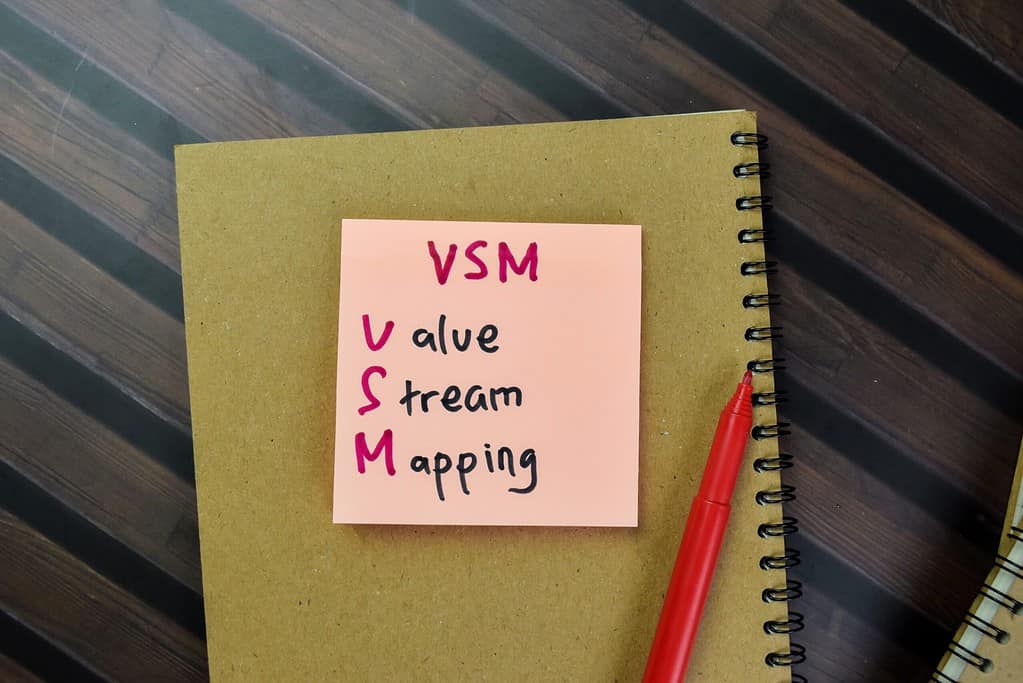
At the most basic level, Value Stream Mapping is a tool that helps companies visualize how value is both created and delivered to a customer throughout an entire process. This “process” starts, in many cases, with raw materials being delivered to a factory or warehouse, and then continues until a final product is ready for shipping to a retail store or some other destination where customers can purchase.
Often closely associated with Lean and even more frequently, Lean manufacturing, VSM is a tool that can analyze the flow of materials, focusing on what the current map looks like and then creating a vision for a future map with the necessary changes in place to eliminate unnecessary waste.
The thing is, even while most people associate Value Stream Mapping with physical materials, this doesn’t mean it can’t grow with the digital age. In this case, you might have more of a digital assembly line, which includes coding, tests, technical architecture, technical environments, and other aspects that require detailed planning.
Arguably, the best example of Value Stream Mapping might be in industries like automobile manufacturing, where it has helped streamline assembly lines by stopping the production of excess inventory. In addition, it has also helped shorten production cycles, or in electronics, where it could have already helped pinpoint early defects that can be fixed before shipping to customers.
The Transition to Digital Value Stream Mapping

For the most part, the traditional understanding of Value Stream Mapping has been focused, understandably so, on physical processes that can be captured and identified. This means that the traditional model of VSM has to make some adjustments in order to keep up in the digital age, which is more complex and moves a whole lot faster.
This is especially true as you get into the world of AI-driven supply chains, where automation is going to ensure that real-time variability is taking place. As a result, this is going to demand dynamic mapping solutions that can change on the fly. It’s for this reason that something like the Internet of Things is going to play a huge role.
Because of all of the new technology that is out there now and will be out in the future, businesses have to work faster and be smarter. This means focusing on exactly what they believe their customers want, and Value Stream Mapping is going to be the key that helps open up a door to a digital transition.
It should go without saying that any transition to a digital VSM model is going to be essential for addressing what can only be described as modern challenges. This means the impact of geopolitical issues on supply chains, remote workforces, and environmental/social/governance (ESG) pressures. The goal is that digital VSM is going to help bridge the divide between the physical and digital worlds, which will allow industries to better optimize their processes, like automating manufacturing or fulfilling e-commerce orders in real time.
The Benefits of Digital Value Stream Mapping

©Juice Flair/Shutterstock.com
When you start to dig down and look at all of the reasons why a company might want to adopt digital Value Stream Mapping, the answer becomes clear quickly. Digital VSM is going to give a company unparalleled visibility into its entire flow, using real-time dashboards.
This likely means that retail companies will be able to monitor their order fulfillment processes in real time, enabling them to detect delays in inventory and make adjustments in real time to increase production when there is a sudden increase in demand.
The hope for retail companies and other industries is that Digital Value Stream Mapping will lead to cost reductions. It’s not unheard of for companies that are first playing in this space to see as much as 30% in savings by automating any non-value-added activities that will allow for a much leaner workflow and reduced operational overhead in the short and long term.
Ultimately, it’s the combination of artificial intelligence, machine learning, and the Internet of Things that will dramatically expand the scope of what Value Stream Mapping can do.
Make the Investment Now
According to current reports in 2025, as many as 70% of companies right now are making significant investments into digital initiatives. While it begs the question as to what the other 30% are waiting for, the companies that are moving forward would benefit from digital Value Stream Mapping. Best of all, this process could help break down the existing silos that often exist between IT and operations, accelerating go-to-market strategies.
The best reason to invest now in any digital Value Stream Map is that, as a company, the goal is to avoid potential disruptions. In the ever-growing digital world, cyberattacks on digital supply chains are a real threat, as are material shortages, so companies need to have plans in place to address potential challenges.
Arguably, the most crucial reason to invest in digital value stream mapping is that companies look to differentiate themselves to customers, showing that they are focused on customer satisfaction. Even things like inventory control can have a significant impact on customer retention and loyalty, and the same can be said for customers who receive products or clothes without defects.
Implementing Digital Value Stream Mapping

If any company is looking to jump into the digital idea of Value Stream Mapping right now, this is the way to do it. First, you’d want to start by assembling a cross-functional team that includes operations, management, and IT, and ask them all to collaboratively put together an existing map of the current state of digital tools being used across the organization right now.
The next step would be to look at all of these tools and analyze them to find and identify any areas of waste, redundancy, or anything that is causing extra-long wait times. It’s okay to use AI simulations to help look at what a future state map would look like.
Another area of opportunity would be to invest in CRM or supply chain software so the flow of data is smooth, all while training employees on how to adapt to more agile methods of continuous improvement. In the same breath, you also have to caution employees against trying to force new technology on them, who might think it’s coming for their jobs.
This is why it’s so important to get all of the key stakeholders inside an organization to buy in, culturally and organizationally, to ensure that there is support for updated Value Stream Mapping initiatives. VSM is absolutely evolving from a one-time effort to a real-time monitoring system for companies that are moving into the digital age and the future.
For companies that want to continue to earn their customers’ loyalty and increase their bottom lines, avoiding the digital future will come at a much bigger cost. This also means making an investment in new tools, like Microsoft Visio, which is a preferred tool to help build detailed VSM diagrams. The same goes for other tools like Lucidchart and Miro, two additional popular tools that come with a worthwhile price tag for every organization.
Other Useful Tools and Concepts
If you want to learn even more about Value Stream Mapping, the good news is that there is no shortage of information available for you to do so. You can start with a step-by-step guide on Value Stream Mapping as it’s the perfect read for beginners who want to familiarize themselves with this business methodology.
After finishing this read, you can move on to another popular VSM subject, supercharging retail, and how Value Stream Mapping can be used to help optimize the customer experience. For your final read on the VSM subject, check out another important topic, and that is an article all about showcasing VSM examples from the real world.
Conclusion
Companies that don’t make the move into a digital Value Stream Mapping world are going to get left behind. Customers and their wallets are demanding better control over inventory and fewer defects than they have seen in the past. Unfortunately, all it takes is one missed opportunity with a customer to have them defect over to your competitor, so moving into the digital future is a must for every organization.
