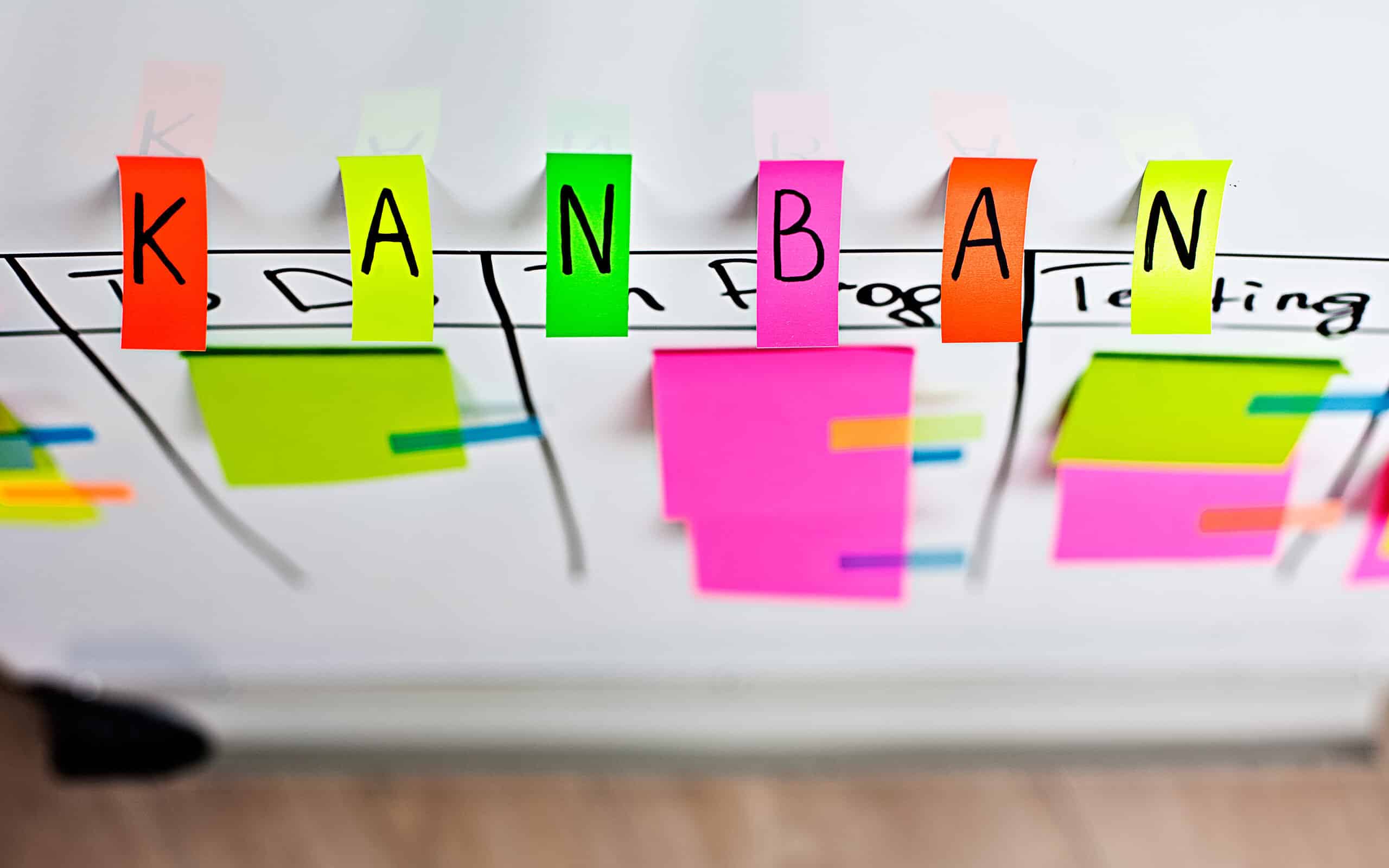
In today’s fast-paced business world, there is no shortcut for effective project management, and to say that it’s crucial for success would be an understatement. It’s for this reason that there are multiple business methodologies on the market that organizations, large and small, are turning to to shore up business practices and increase profits.
One such tool that has gained popularity with both individuals and corporations alike is the Kanban board. What companies have learned is that a tool like Kanban can help keep teams and organizations at the top of their game and handle projects large and small with the kind of efficiency that doesn’t allow for any wasted time or profits.
What Is Kanban?

Best known as the Japanese word for “signboard” or “billboard,” Kanban is something that Toyota came up with in the 1940s. In simple terms, Kanban is really just a simple way of visualizing all of the work you have in front of you using columns and cards, so you can get a clear picture of what needs to be done without feeling overloaded.
It’s not irresponsible to think of a Kanboard board as a pumped-up to-do list that has a lot more muscle than typical to-do lists, like you would find in something like Apple Reminders. You can call it a Work Management Method, as it allows you to not just manage each project as a whole, but all of the individual activities that are going to take place alongside it.
If used correctly, the hope and goal of the Kanban system are not just to improve productivity (which is the primary reason), but also to identify bottlenecks and improve the organization’s workflow as a whole. Industries like software development and tech firms have begun using Kanban boards with significant success, even if they have their origins in the automobile world.
Key Components of a Kanban Board
In the Kanboard board system, you typically have three to four components, all visual. These visual elements can be on software, or can be something as simple as colored paper or stickers hanging on a board in a room that multiple people can keep track of.
At its core, Kanban starts with its Columns, each of which represents a different stage in the current workflow. This could include columns like “To Do,” “In Progress,” and “Done,” although the benefit of Kanban is that these column names can be customized to your business and field.
A Card is going to represent a different task that is posted within each column, and is going to include important information like the assigned team members, due dates, priority level, and a detailed task description.
“Swimlanes” are also growing in popularity on Kanban boards as a more horizontal representation of being able to separate the different kinds of work teams that are doing. This could be helpful if you have two different teams working on the same project, but in different ways, so they belong on the same board, but are represented separately.
A “Work-In-Progress” limit is something that is also becoming increasingly common in corporate environments, where each column has a limit to how many different projects can be added at once to prevent overloading teams and keep work moving smoothly.
Why Kanban and Productivity Are a Perfect Match

In the world of to-do lists, it’s far too easy to feel like it can become a black hole as lists just grow and grow and grow. This is what makes productivity struggles come alive as individuals and teams feel the weight of projects that just keep piling on.
The joy of using Kanban is that it allows for work to become more visible, and therefore more manageable, as you can turn what feels overwhelming into priority piles that help steady progress become the law of the land.
This is why apps like Trello have become so popular with both teams and individuals, because they help take the traditional to-do list and reorient it for a busy world where multitasking is the norm, especially for remote teams that can’t run to each other’s desks.
The hope is that Kanban boards become a habit, as you can see the board fill up and empty, so there is an approachable nature where you can physically see things are getting done.
The Key Principles of Kanban
If you want to use Kanban effectively and achieve instant productivity gains, you need to understand its key principles.
Visualizing Your Workflow

©Monster Ztudio/Shutterstock.com
This is arguably the most essential principle of Kanban, and it’s all about visualizing the workflow that you and your teams have in front of you. Kanban does this extremely well by providing not just a visual overview of what needs to get done, but a clear look at where each project stands, so teams know where they need to put their energy.
Limit Work-In-Progress
As mentioned above, by limiting the number of tasks that can be added to columns at any given point, Kanban does its job of limiting overload and promoting productivity on the highest priority tasks. In addition, limited WIP also helps to keep bottlenecks to a minimum, which also enhances productivity.
Manage Flow
Kanban all but demands that you continously monitor where things stand as projects and tasks move through different columns. This is going to be key to help teams optimize processes and keep working moving smoothly, which speaks directly to enhanced productivity.
Encouraging Continuous Improvement
It’s super important to remember that Kanban boards are not a set-it-and-forget-it kind of productivity system. These are collaborative efforts that need to be reviewed frequently to ensure that things are moving forward. Teams need to keep talking during stand-ups about what is working and if they are seeing recurring bottlenecks, which is how continuous improvement starts to take shape.
Facilitating Team Collaboration
No matter how much you have on a Kanban board, it’s going to make it easy for teams to see who is doing what and hopefully make it so others can jump in and help. At least that is the idea of daily huddles, as it will break down silos in the hopes that someone says to someone else on another team, “Hey, do you need a hand with that?” It sounds corny, but this is how teams build trust, as everyone wants to be a part of the big picture.
How Kanban Truly Can Unlock Instant Productivity Gain

©Wright Studio/Shutterstock.com
While Kanban might feel structured, and it is, it’s also flexible enough to help you enhance productivity in ways that are best for your business.
Improves Task Prioritization
With the use of a Kanban board, productivity gains happen almost immediately as priority tasks can be visualized so that it becomes habit for the most critical tasks to be the first ones that are worked on.
Reduces Bottlenecks
Try to imagine how many bottlenecks exist in an organization that don’t have any kind of to-do list flow or project management system. As soon as Kanban is introduced, team members are going to be able to quickly identify where bottlenecks are taking place and quickly address them so they are not longer a hinderance to get more important tasks done.
Better Collaboration
As always, collaboration amongst teams and between teams is going to be super important to help promote accountability for everyone. When you consider that everyone on the team or teams can see where every project is step wise and how it’s progressing, there is a need for better collaboration so everyone stays on task as nobody wants to be the reason why something is dragging everyone else down.
Continuous Improvement
Continuous improvement gets talked about a lot and for all of the right reasons, as there is a need to maintain iterative improvements on an ongoing basis. The biggest hurdle to companies is not just being satisfied with just a few small improvements, but also tackling a small portion of the bottlenecks that are currently surfacing. The idea is to continuously improve so that these situations don’t occur again in the future.
Improved Workload Management
It might sound crazy, but there is just something about visualizing a workflow and setting work-in-progress limits that really does help the team balance their workload. Unfortunately, it goes without saying that teams can quickly find themselves underwater due to too few people being able to help or just an overwhelming number of asks coming their way. The current line of thinking is that Kanban can keep teams focused, which means productivity is increased as there is a clear set of priorities.
Getting Started with Kanban for Instant Productivity

©GaudiLab/Shutterstock.com
The good news is that getting started with Kanban for instant productivity isn’t hard at all, as it’s as simple as setting up a Trello board or something similar with teams. Monday.com, Asana, all of these tools have Kanban boards that can be introduced for teams of one, 5, or 50.
You’ll get started by prioritizing let’s say, the top 10 tasks that need to be completed by setting up “To Do,” “Doing,” and “Done” columns. Set up WIP limits, like say 2-3 projects per son, and then have every person on a team pull one task to get started.
It’s helpful to perform daily check-ins, better known as daily standups, to see where everyone is, how their work is progressing, and if bottlenecks are starting to show up. You can adjust the WIP limits if things are piling up and there should be a small celebration with every “Done” card.
Other Useful Tools and Concepts
If you want to learn more about Kanban, and who doesn’t, you can start by looking at how Kanban has been supercharging Agile software delivery. This is one of the areas where Kanban really shines, which is also true for optimizing the workflow of remote workforces, where Kanban can keep teams located anywhere on the same track.
As popular and successful as Kanban is right now, it’s not the only tool out there that works. This is true for things like the Theory of Constraints, where learning about its advanced applications tells you how popular this system can be. How about clearing the backlog with BPR? Backlogs are synonymous with Kanban, so this is an appropriate thing to read immediately after.
Conclusion
At the end of the day, it’s pretty clear that Kanban is going to remain one of the most popular project management tools around. Not only does it work well for business, but Kanban is essentially an opportunity to take chaos and turn it into calm using a visually representative system that makes productivity feel very natural.
