

Creating a Culture of Continuous Improvement with Business Process Quality Management
Updated:When there is a need to look beyond continuous improvement methods, there is a concept that takes looking at workflow even further.
Read more
Passive Data
Published:Not all data is collected equally. Passive data is information collected without direct input from the participant and can provide substantial insight into key processes.
Read more
Tips for Using Histograms to Analyze Data and Make Decisions
Updated:The histogram tool in Lean Six Sigma is one way to visualize your process data to identify any potential problems in your process. If you’re not already familiar with the histogram tool in Lean Six Sigma, well then it’s time to meet one of the most powerful tools in the data analysis world.
Read more
The Benefits of Passion for Action in the Workplace
Updated:Having employees that want to go above and beyond, endorse your organization, and trust in its leadership is not an impossible feat. It just requires developing a passion for action.
Read more
Breaking Down Complex Subjects: The Value of Interrelationship Digraphs
Updated:No, that is not a spelling error. A digraph is a bit different than a standard diagram in that it is a diagram that puts an emphasis on direction.
Read more
The Importance of Clear Goals and Objectives in Design for Six Sigma (DFSS)
Updated:Designing an effective and efficient plan to develop new products or services is a complex challenge that requires thorough planning. Applying the methodology of DFSS allows businesses to see improvement in products or services that normally would have been missed in other design strategies.
Read more
Project Charters: What to Include and Why
Updated:If you are embarking on a project for your organization, it is time to put together a charter.
Read more
The Business Value of Correction: Why It Pays to Get It Right
Updated:Correction is a critical part of any lean six sigma program. It involves fixing problems once a firm identifies a good or process that does not meet minimum quality standards.
Read more
Affinity Diagrams: Your Ultimate Tool for Data Organization
Updated:Sometimes there are too many ideas coming at you at once. When this is the case, instead of succumbing to the chaos, grab a stack of Post-it notes and create an affinity diagram.
Read more
Why Business Impact Analysis Should Be a Priority
Updated:What would happen if a new competitor suddenly enters the market? Can your company survive if a key supplier fails you? Get answers to the “what ifs” of business with an impact analysis.
Read more
Choosing Common Units: Best Practices for Business Communication
Updated:Without having a defined way to measure the amount of something, the world would be chaotic. Thankfully, we have units and ways to quantify and measure them.
Read more
A Closer Look at the Factors that Influence Type II Errors
Updated:Errors are common when testing a statistical hypothesis. They can be difficult to avoid and by taking to preventive measures to protect yourself from one kind, you open yourself to the likelihood of another.
Read more
What You Need to Know About the Theory of Constraints
Updated:Limitations define life. Businesses face this reality every day in many different ways. That’s why leaders need to learn how to manage, overcome and capitalize on these constraints.
Read more
The Power of Sub-Groups in Decision-Making
Updated:Being able to divide a sample into smaller groupings can be a vital tool for understanding what is happening in your processes.
Read more
The Advantages of Quantifiers: Making Complex Ideas More Compact
Updated:In everything from everyday language to mathematical logic problems, we often need a way to express just how much or how often something occurs or exists, in order for a statement to be clear or make sense.
Read more
What Is Population Sampling and Why Is It Important?
Updated:When sampling, it is important to avoid bias, a lack of precision, and a lack of reproducibility. Having an understanding of population and how they work can help you avoid this.
Read more
How Network Diagrams Improve Project Management
Updated:Diagrams can be extremely helpful as a visual aid to gain understanding of a project. This is a valuable type of diagram that you will likely come back to time and again for your team projects.
Read more
Managing Errors: Key Strategies for a Successful Business
Updated:Errors are an issue that should be kept to a minimum, especially for those aspiring to a high Sigma level.
Read more
The Challenges of Dealing with Concomitant Variables in Statistical Analysis
Updated:Concomitant variables are secondary variables that may affect a process under study but are not the significant parameters that the research is designed to understand or control.
Read more
Q3: What it is and How to Use it in Statistical Analysis
Updated:If you have ever taken a test and your results told you that you were in a certain percentile or quartile, you may already have a bit of an understanding of how quartiles and boxplots work. Q3 is an important part of fully understanding boxplots.
Read more
Why Investing in Quality Assurance is Worth It
Updated:The concept of quality assurance began in the manufacturing industry and is now standard for most industries.
Read more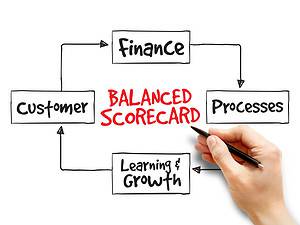
Transforming Business Performance with Balanced Scorecards
Updated:Knowing how your company is doing and where it can improve is vital to the health of your organization. Performance metrics help to accomplish this and one such metric is a balanced scorecard.
Read more
The Importance of Effective Auditing
Updated:In business, things aren’t always what they seem. Companies that want to see what’s really going on conduct audits to get actionable details.
Read more
Best Practices for Accountability in the Workplace
Updated:Accountability is everything. It builds trust, reputation and responsibility and is the foundation of every good business practice.
Read more